
In a world full of noise, busyness, and endless distractions, learning to discern the voice of God through the inward witness is not only a spiritual necessity it’s a lifeline. God still speaks, and often, He does so through that still, small voice within us. But to hear it, we must quiet the noise both around and within us.
As discussed in part one of the article, learning to cultivate God’s presence through worship, meditation, and prayer is foundational. These are not just spiritual disciplines; they are means by which we position ourselves to hear. It’s difficult, if not impossible to perceive the gentle nudging of the Holy Spirit when our spirits are drowned in distractions, cluttered schedules, and mental chaos.
Creating Space to Hear
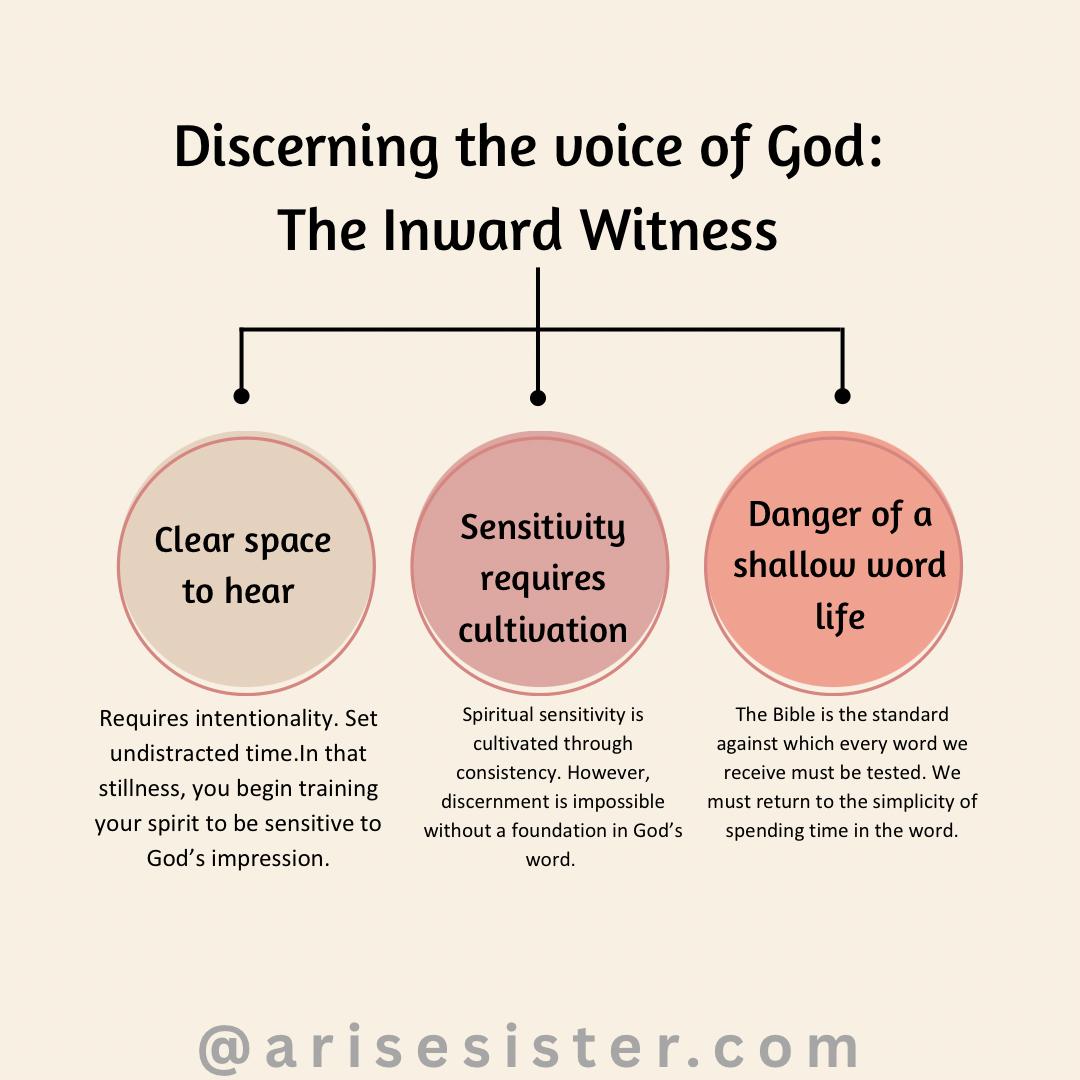
Hearing God’s voice through the inward witness requires intentionality. One of the most effective ways to begin is by setting aside undistracted time. This may mean waking up earlier, turning off your phone, or even stepping away from people. In that stillness, you begin to train your spirit to become sensitive to God’s impressions.
In these quiet moments, the Holy Spirit often speaks, not audibly, but within our own spirit. Romans 8:16 says, “The Spirit Himself bears witness with our spirit…” This is how God communicates with His children: spirit to spirit. What you hear won’t always be dramatic; it may come as a thought, a conviction, or a deep sense of knowing. But it carries an authority and clarity that stands out. It may not be what you would naturally think or choose to do. That’s often the sign that it’s not just “you.”
Sensitivity Requires Cultivation
Becoming spiritually sensitive doesn’t happen overnight. It’s cultivated through consistency. As we spend time in God’s presence, we learn to recognize His voice. Sometimes, a thought will come that seems random, yet it tugs at your spirit. Don’t brush it off, pray about it. Sensitivity to the inward witness means you pay attention to those moments, test them in prayer, and obey when God confirms.
However, discernment is impossible without a foundation in God’s Word. You won’t know if it’s God speaking if you don’t know the nature of God and how He acts as revealed in Scripture. This is where many believers fall short. Instead of building a personal relationship with the Word, many rely solely on what the “man of God” preaches or the latest prophetic word. And as a result, we have a generation of believers who claim “God said,” yet act in ways completely inconsistent with His character.
The Danger of a Shallow Word Life
We’re seeing young people commit atrocities or make life-altering mistakes, all in the name of “God said,” or “My pastor told me God said…” Why? Because they have not taken time to know the God of the Word for themselves. If you only feed on secondhand revelation, you’ll always need someone else to interpret the voice of God for you. That’s not how we’re called to live.
We must return to the simplicity of spending time in the Word. The Bible is the standard against which every “word” we receive must be tested. The Spirit of God will never contradict the Word of God. When we know the Scriptures, we can better discern the Spirit’s voice and avoid deception.
Final Thoughts
The inward witness is a powerful, intimate way God leads His children. But it doesn’t function in chaos. It thrives in stillness, intentionality, and truth. If you want to walk in step with the Spirit, make it a habit to withdraw from the noise, anchor yourself in God’s presence, study His Word, and obey His promptings. That’s where clarity comes, and that’s where transformation begins.